We Gathered in Whistler: What nearly 300 Jewish leaders across British Columbia revealed
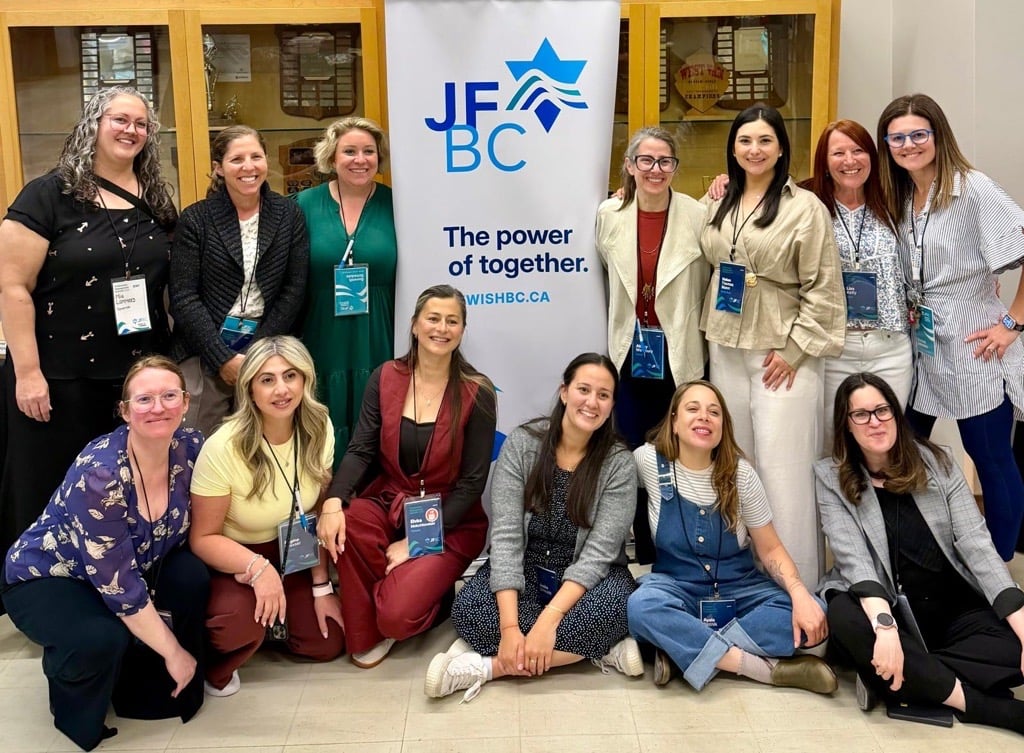
Standing in Whistler this weekend at the Community Engagement Summit, I looked out at nearly 300 Jewish leaders from 30 communities across a province five times the size of New England and felt something unmistakable. Surrounded by snow capped peaks, fresh mountain air, and the quiet stillness that only a place like Whistler can offer, there was a sense that something meaningful was unfolding. This is not peripheral work. It is not a side project. It is the very heart of what Jewish Federation is meant to do.
This was more than a conference. It was an expression of what our community has been building, and what this moment urgently demands. At a time when unity matters, when collective voice matters, and when Jewish communities feel both vulnerable and determined, gathering across such distance is itself a statement of purpose.
People drove for hours. Some flew. In some cases, participants are a plane ride away from one another. And yet they came, because something real is taking shape. Over the past year, our Jewish Federation has invested in a network of 11 community connectors, staff embedded across 10 regions, helping turn a provincial vision into lived reality. Through more than 200 events, they have not just convened programs, they have built relationships, strengthened local leadership, and created the conditions for Jewish life to take root in places where it once felt fragile or distant.
That is the difference. Community engagement is not simply about programming. It is about infrastructure. It is about ensuring that wherever Jews live, there is someone local who can convene, respond, organize, and build. That is how a community becomes durable.
What happened in Whistler made that reality impossible to ignore. The stories were powerful. The needs were real. And the faces in the room made clear that this was not symbolic. It was a demonstration of what it means to build a network of communities that see themselves as part of something larger, and act that way.
When October 7 happened, everything accelerated. We began hearing from Jews across British Columbia who were saying, in different ways, the same thing: see me, hear me, stand with me. What might once have been a long term investment in connection became an immediate communal responsibility.
That urgency was present in Whistler. It gave the gathering weight and clarity. This was not simply a professional convening. It was a moment of communal affirmation and coordination, a chance to align, to share strategies, and to make sure that no community, regardless of size or location, is left to navigate this moment alone.
What moved me most was not only the scale of the gathering, but its texture. There were conversations in hallways, quiet moments over coffee, and new relationships forming in real time. My own family was there with me, and I watched my children, 10, 10 and 8, move through the space with a kind of ease and openness that reminded me what this is all for. By the end of the weekend, they had swapped contact information with new friends from communities across the province. That alone tells a story. The future of Jewish life was not being discussed in theory. It was happening in front of us.
Just as important were the countless leaders from across Federation’s vibrant network of agencies who were with us throughout the weekend. They were not there as observers. They were there as builders, creating connections, opening doors, and helping ensure that the relationships formed in Whistler translate into real opportunities long after the summit ended. Their presence underscored that this work is not carried by any one organization alone, but by a system committed to showing up for one another.
We were joined by experts from across Canada, the United States, and Israel who brought data, fundraising experience, and on the ground perspectives that helped communities imagine what stronger local capacity could look like. But for all the expertise in the room, the most powerful insight came from the community itself.
A member of the Whistler community stood up to describe an Israel trip she was organizing and said, simply, that they were going to Kiryat Shmona, our sister community. That word, our, stayed with me. I turned to our extraordinary volunteer leader Deborah Folka and said: that is exactly what happened here. In that moment, “our” no longer belonged only to those of us in Vancouver. It belonged to everyone in the room. The idea of a sister community had expanded from a local relationship into a provincial sense of ownership and responsibility. She felt that Kiryat Shmona was as much her sister community as it is for me, and for those of us who have long carried that connection in Vancouver. That shift, from local to shared, from familiar to collective, is what we are building.
In a setting as expansive and awe inspiring as British Columbia itself, that shift felt not rhetorical but real. And it matters. Because when people begin to see themselves as part of a shared whole, responsibility follows. Investment follows. And resilience follows.
One story captured the impact of this work. A parent described what it meant to watch their child experience a first Passover seder. In another context, that might seem like a small moment. It is not. It is the transmission of memory, identity, and belonging. It is Jewish continuity in real time. These are the moments community engagement makes possible, and they are exactly what justify the investment and urgency behind this work.
There is much darkness in the world right now. It would be easy to focus only on what threatens us. But what I saw in Whistler was light. Light in reunion. Light in recognition. Light in children meeting one another. Light in adults realizing they are not alone. It was the simple but profound truth that wherever a Jew lives in this province, they are part of us. They are seen. They are held. They belong.
This kind of work does not happen on its own. It requires vision, sustained commitment, and the philanthropy to translate aspiration into action. It would not have been possible without the partnership of the Ronald S. Roadburg Foundation, and in particular Elana Bloomfield, who has walked this journey alongside us with clarity, trust, and a shared sense of purpose.
It also reflects the leadership behind the work itself. Mijal Ben Dori, our Chief Planning Officer, brought focus, discipline, and heart to this effort from the outset, helping guide it from idea to reality and ensuring that what we built was not only ambitious, but structured to last.
And it echoes a charge I was given years ago by Stephen Gaerber, who urged me when I first arrived to focus on the outlying communities. What I saw this weekend was the living answer to that call.
That is what made this moment so powerful. In Whistler, people did not simply attend a summit. They showed up for one another. They strengthened a network. They widened the circle of belonging. They made visible a provincial Jewish community that is no longer theoretical.
The lesson is simple. When we invest in connection, when we build local capacity, and when we create space for people to see themselves in one another, Jewish life does not just endure, it grows stronger.
That is what happened in Whistler. And that is what we must keep building.
Ezra S. Shanken is Chief Executive Officer of the Jewish Federation of British Columbia