The Times of Israel · The Blogs
We Don’t Choose Sides. We Strengthen Communities.
CEO of Jewish Federation of British Columbia
Published · 10:02 PM (as listed in the original publication)
View original article on The Times of Israel →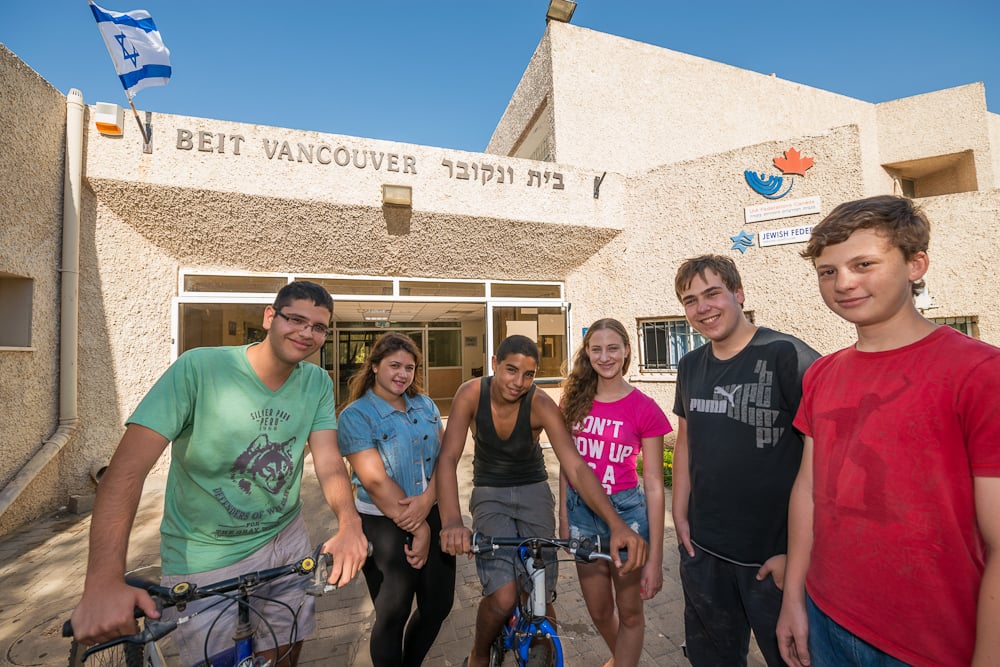
Why Jewish Federation of British Columbia’s Role Matters in Divided Times
As we approach the High Holidays and enter the final stretch toward Israel’s October 27 election, I find myself reflecting on a question that will become increasingly relevant in the weeks ahead: What is the role of the Jewish Federation of British Columbia during periods of political intensity and communal debate?
I ask this question not because of any single event, personality, or disagreement. I ask it because periods of heightened passion have a way of testing institutions. They challenge us to determine not only what we believe, but who we are. In moments like these, it is easy to be pulled away from our mission by the urgency of the day. It is much harder, and much more important, to remain anchored in purpose.
That is why now feels like the right moment to reaffirm who we are, what we do, and why we do it.
Recently, I was reminded of this while observing a disagreement within a vulnerable municipality in northern Israel. The details of that situation matter less than the lesson it offered. Well-intentioned people saw different paths forward. Some advocated for a particular outcome. Others sought to exert pressure or align with one side.
Our instinct was different.
Rather than deepening division, we sought to encourage dialogue, reinforce local leadership, and strengthen the community’s ability to move forward together. We did not see our role as determining the outcome. We saw our role as helping create the conditions under which the people closest to the challenge could find a path forward themselves.
The experience reinforced a lesson that extends far beyond any one municipality or election cycle.
Influence is powerful. The question is not whether we have influence. The question is how we choose to exercise it.
At the Jewish Federation of British Columbia, we have spent years defining who we are and where we can have the greatest impact. Our mission is to connect, support, and strengthen Jewish life. Our vision is a province proudly connected to our work across British Columbia, Israel, and the global Jewish community, serving and enabling Jewish life in all its diversity.
Through our strategic planning process, we made a conscious choice about where we can contribute most: bringing people together.
Those principles are not meant for easy moments. They are meant for difficult ones. They are meant for periods of uncertainty, disagreement, and polarization.
To be clear, this is not a criticism of philanthropy or advocacy. Our community is blessed with visionary donors and foundations whose generosity, passion, and willingness to take risks have transformed Jewish life in British Columbia, Israel, and around the world. Healthy communities need philanthropists, governments, advocacy organizations, civic institutions, and community organizations. Our strength comes not from doing the same work, but from each bringing its unique contribution to the table.
At the Jewish Federation of British Columbia, our contribution is different. We bring people together. We invest in communities. And we strengthen the people and institutions that make those communities resilient..
Our investments reflect this philosophy.
Consider Galil East (גליל East), a regional leadership initiative in northern Israel created by the Eastern Galilee Cluster. The program brings together emerging leaders from municipal government, business, civil society, and the private sector, to tackle shared regional challenges. Participants come from across the diverse communities of the Galilee, including Jewish, Druze, Muslim, Christian, and Circassian communities.
The purpose is not to create agreement on every issue. The purpose is to create relationships.
In an era when so much attention is given to choosing sides, Galil East represents a different philosophy. Rather than investing in a particular outcome, it invests in capacity. Rather than strengthening one faction, it strengthens the ability of diverse leaders to work together across differences. It recognizes that resilient communities are built not only through infrastructure and resources, but through trust, understanding, and shared responsibility.
The same philosophy can be seen in Beit Vancouver in Kiryat Shmona. For more than four decades, the centre has been a cornerstone of the partnership between our community and Israel’s northernmost city. Every week, more than a thousand children and teenagers participate in leadership programs, youth movements, inclusion initiatives, arts programming, and social-emotional support.
At first glance, a youth and community centre may seem far removed from questions of civic resilience or regional recovery. In reality, it is exactly where resilience begins.
Strong communities are not built only in city halls. They are built in classrooms, community centers, youth leadership programs, and neighborhood gathering spaces. They are built when young people develop confidence, when families find support, and when people feel connected to something larger than themselves.
The same belief guides our support for Tel-Hai University of Kiryat Shmona in the Galilee. The institution’s transition to a university represents far more than a new academic designation. It is an investment in the future of an entire region. Universities attract talent, cultivate leadership, drive innovation, and create economic opportunity. In regions facing demographic, economic, and security challenges, they help transform resilience into renewal.
Galil East strengthens leadership. Beit Vancouver strengthens community. Tel-Hai strengthens opportunity.
Together, they reflect a simple idea: we are not attempting to determine the future of northern Israel. We are helping create the conditions that allow its residents to determine that future themselves.
These investments also reflect something fundamental about who we are here in British Columbia. We believe that lasting change comes from strengthening people, relationships, and institutions, rather than trying to control every outcome. That philosophy applies whether we are supporting communities in the Lower Mainland, on Vancouver Island, across regional British Columbia, or in northern Israel.
Most importantly, we invest in people.
Too often, discussions about rebuilding focus on politics, funding, and institutions. Yet the real work of rebuilding communities is carried out by extraordinary people on the ground. The youth workers opening the doors each morning. The educators helping children regain confidence. The social workers supporting vulnerable families. The municipal leaders learning to cooperate across differences. The professionals and volunteers who choose, every day, to invest in the wellbeing of their communities.
They are the ones doing the work.
Our responsibility is to help them succeed.
As elections approach, there will inevitably be pressure on organizations like ours to become something else. People will ask us to take positions, endorse outcomes, elevate certain voices, and oppose others. Many of these requests will come from a place of genuine concern for Israel and the future of the Jewish people.
At the Jewish Federation of British Columbia, this moment does not call us to redefine our mission. It calls us to recommit to it.
We do not need to be everything to everyone. We need to be true to who we are. Our role is to connect people, invest in resilience, and strengthen the individuals and institutions that help communities thrive. In moments of uncertainty, when others are pulled toward polarization, we must remain anchored in our purpose and confident in our role.
Politics will always have its place. So will philanthropy. Our role is different. Our influence comes from connection, not control. We don’t choose sides. We strengthen communities. And we should be proud of that role.