
OUR SHARED JEWISH STORY
The Story of Beta Israel
A gateway to Beta Israel—meaning “the House of Israel,” the historic name of the Ethiopian Jewish community—and to a living Jewish heritage of covenant, community and an enduring connection to Jerusalem.
A LIVING JEWISH HERITAGE
Meet Beta Israel
Beta Israel—“the House of Israel”—is the ancient Jewish community rooted in Ethiopia. For centuries, Ethiopian Jews sustained a complete communal and religious world in the highlands of northern and northwestern Ethiopia. Despite geographic separation from other major Jewish centres, missionary pressure, dispossession and periods of persecution, the community preserved its Jewish faith, sacred learning, distinctive practices and enduring bond with Jerusalem.
Beta Israel preserves several traditions concerning its ancient origins, including descent from the Tribe of Dan and historical connections with Jewish communities in Egypt and southern Arabia. Scholars continue to investigate the earliest chapters of the community’s history, but Beta Israel’s Jewish identity does not depend upon any single historical theory. It was preserved by the community across generations and affirmed by leading rabbinic authorities.
Sacred life, leadership and learning
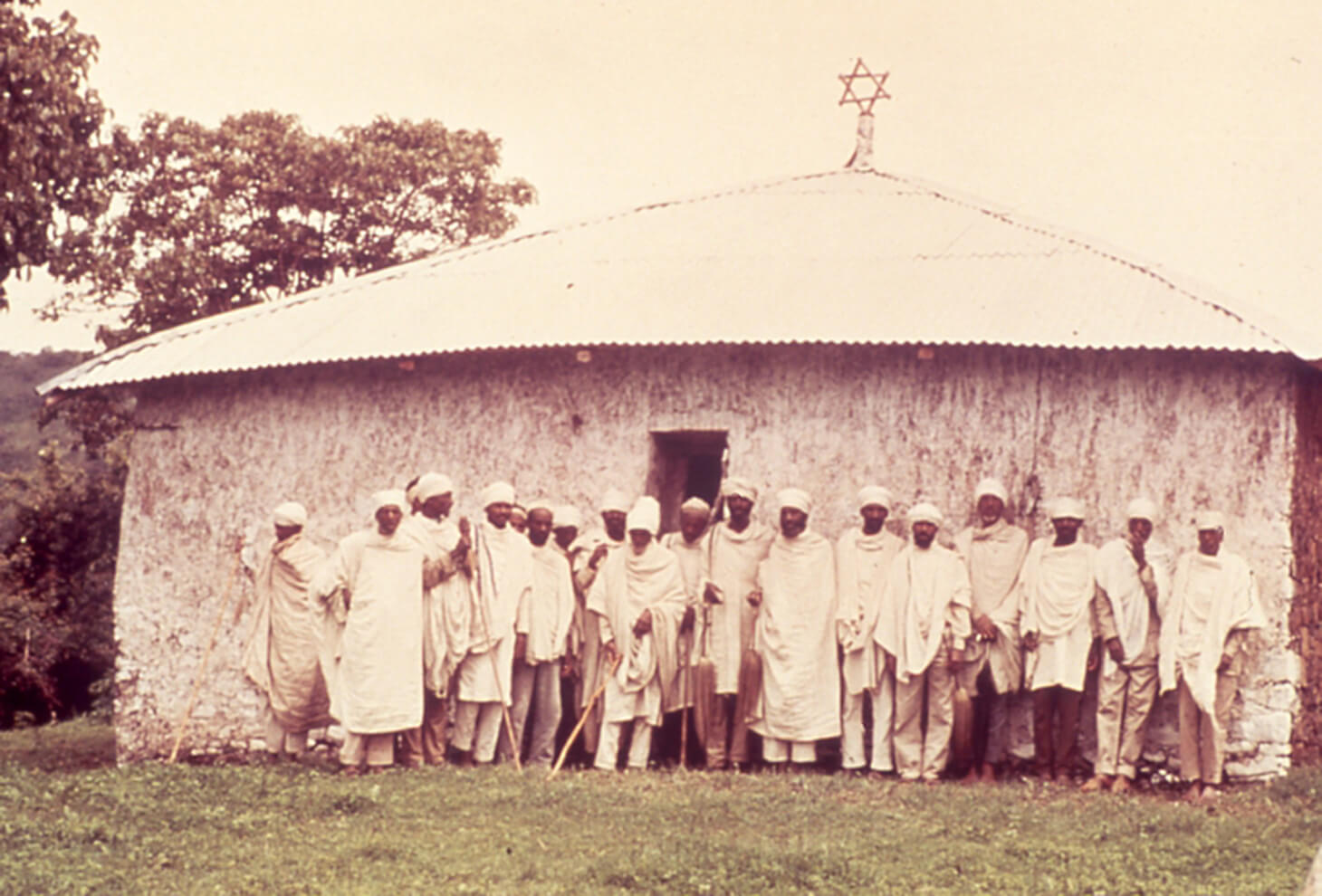
The community’s sacred literature was transmitted in Ge’ez. At its centre stood the Orit: the Five Books of Moses together with Joshua, Judges and Ruth. A broader sacred corpus included ancient Jewish works such as Jubilees and Enoch, preserved in full through Ethiopian manuscript traditions. The Qessim—Beta Israel’s spiritual leaders—served as teachers, judges and guardians of the Orit, guiding both religious and communal life.
Shabbat, prayer, fasting, dietary practice, circumcision, honouring parents and elders, hospitality, generosity and trust in God gave Jewish faith a daily form. Across generations, the community preserved distinctive teachings, melodies and customs rooted in biblical tradition, including practices associated with the First Temple period.
Ritual purity was central to religious and communal life in Ethiopia and was carefully observed. During menstruation, women stayed in a separate designated dwelling, with stones marking its boundary. Family and community members brought food and provided support. After childbirth, mothers observed a period of separation lasting 40 days following the birth of a boy and 80 days following the birth of a girl.
Rare Ethiopian Beta Israel Holy Books to Be Available via NLI Website ↗Shared foundations, distinctive traditions
Beta Israel and Jewish communities around the world share the central foundations of Jewish life: belief in one God, devotion to Torah, Shabbat, circumcision, sacred time, communal responsibility and a deep relationship with Jerusalem. Distinctive practices are different historical expressions within one Jewish people.
Beta Israel centred its religious life on the Orit, sacred Ge’ez texts, oral teaching and the leadership of the Qessim. The community preserved its own traditions of interpretation and religious practice, passed from generation to generation. These should be distinguished from the rabbinic literary tradition of the Mishnah and Talmud.
Many practices closely reflected biblical laws, including those of ritual purity. Ritual impurity is a religious legal category; it does not imply dirtiness, inferiority or moral wrongdoing.
Jerusalem carried across generations
Jerusalem lived in prayer, song, celebration and mourning. The longing for Zion also inspired action long before the major airlifts, including Abba Mahari’s attempted journey in 1862, independent aliyah efforts and later maritime evacuations using the ship Bat Galim. Ethiopian Jewish families, activists and community leaders played an active role in opening routes to Israel.
Many families travelled on foot from Ethiopia to Sudan, hoping to continue to Israel. Approximately 4,000 men, women and children died along the way and in refugee camps. Their memory is honoured each year on 28 Iyar, Jerusalem Day, in a national memorial ceremony. A dedicated memorial at Mount Herzl was inaugurated in 2007.
Traditions of origin and Jewish belonging
Beta Israel’s Jewish belonging is the starting point. It was lived and preserved by the community across generations and affirmed in halakhic rulings by leading rabbinic authorities, including the Radbaz and Rabbi Ovadia Yosef. Scholars and community traditions offer several accounts of the community’s earliest history; those historical questions do not determine Jewish identity.
Community history and leadership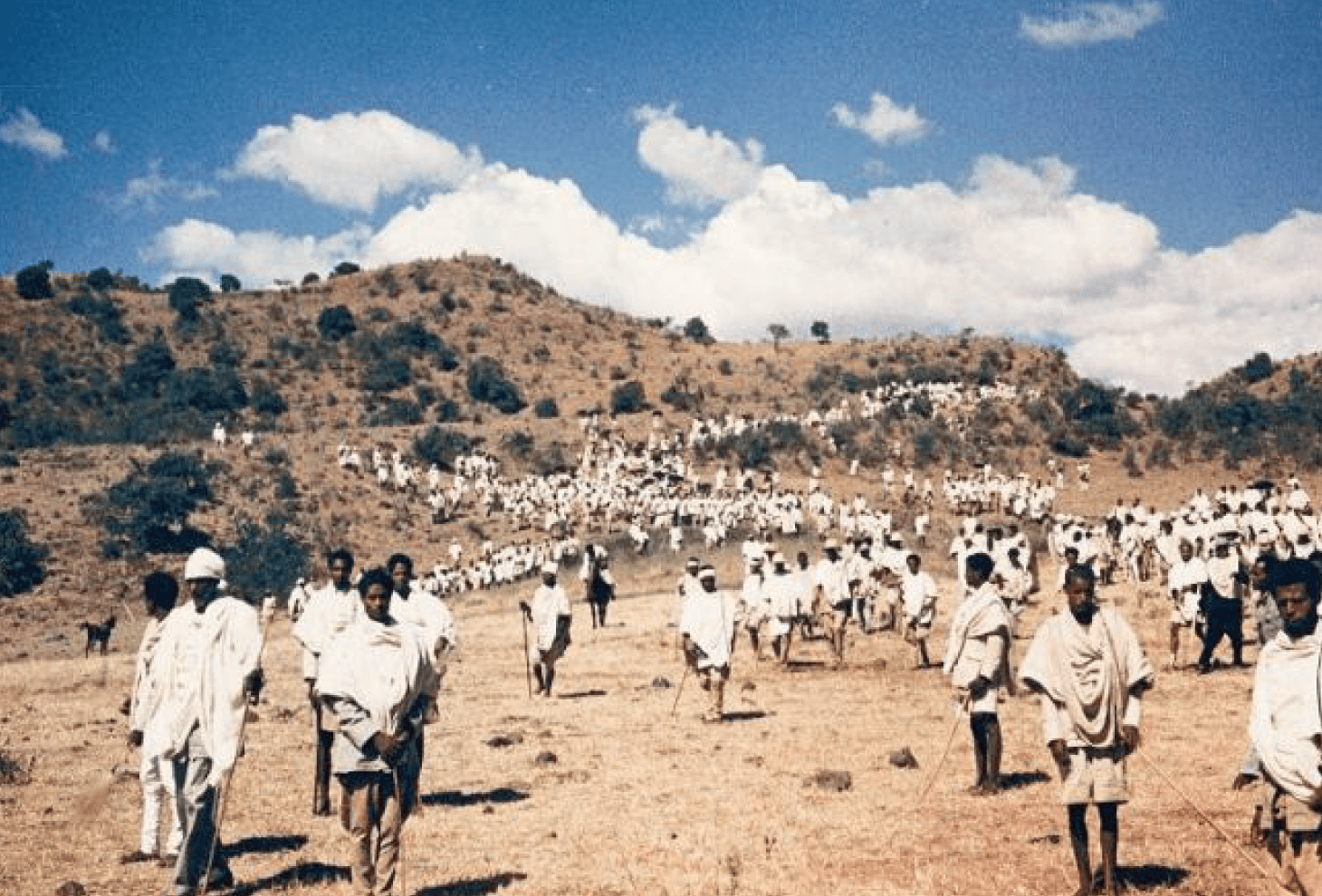
JOURNEY THROUGH TIME
The Journey of Beta Israel
Follow a Jewish journey of covenant, community, courage and return. Open a milestone for the story, the people who shaped it and further reading.
AntiquityJewish belonging & traditions of origin
Community tradition & scholarship
Beta Israel is an ancient Jewish community that preserved Torah, prayer, Shabbat, covenant, communal leadership and an enduring connection to Jerusalem. Different traditions and scholarly approaches propose different accounts of the community’s earliest origins, but this historical discussion does not determine whether Beta Israel belongs to the Jewish people.
There is no single scholarly consensus about the earliest origin or migration route.
PEOPLE IN THIS JOURNEY
6th–5th c. BCEReturn & covenant renewal
Biblical context
Ezra 1 tells of return from Babylonian exile and the rebuilding of Jerusalem. Nehemiah 8–9 describes a public gathering for Torah reading, fasting, confession, prostration and renewed commitment to the covenant.
This is biblical and religious context for understanding Sigd. It is not evidence that Beta Israel migrated to Ethiopia in the time of Ezra or Nehemiah.
Before 14th c.Oral tradition & early community memory
Community memory
Before the fourteenth century, the history of Beta Israel was rarely recorded in written sources. Community memory, religious teaching and practices were preserved largely through oral transmission from generation to generation. This living heritage included the community’s own traditions of interpreting and observing the Orit.
Surviving documentation is limited for this early period, so particular dates and sequences should be presented with care.
PEOPLE IN THIS JOURNEY
Late 13th–17th c.Gideonite rule & resistance
Documented history & community memory
From the late thirteenth century, Ethiopian royal chronicles and later accounts describe Jewish leaders, territories, warfare and periods of political autonomy in the northern highlands. Community memory calls this political tradition the Gideonite kingdom.
“Gideonite kingdom” is a useful community and historical frame, but its borders, institutional continuity and connection to individual legendary rulers should not be presented as fully settled.
15th–17th c.War, dispossession & survival
Documented history & religious tradition
Solomonic campaigns against Beta Israel strongholds led to military defeat, loss of land, political subordination and pressure to convert. Communities nevertheless rebuilt religious and communal life through local leadership, sacred learning and networks of mutual support.
The wars are documented, while several biographies and conversion narratives survive principally through tradition. The two forms of evidence should remain visibly distinct.
PEOPLE IN THIS JOURNEY
1862–1950sJourney, contact & education
Documented history
Abba Mahari’s attempted journey to Jerusalem in 1862 was followed by organized advocacy and renewed contact with world Jewry. Rabbi Azriel Hildesheimer appealed for aid in 1864; Joseph Halévy arrived in 1867; Jacques Faitlovitch later developed schools, international networks and educational opportunities.
Outside emissaries did not “discover” Beta Israel or create its Jewish identity. The community already possessed its own institutions, sacred texts, leadership and longing for Jerusalem.
PEOPLE IN THIS JOURNEY
1973–1991Recognition, activism & aliyah
Documented history
Rabbi Ovadia Yosef ruled in 1973 that Beta Israel are Jews, relying in part on the Radbaz; the Law of Return was applied in 1975. Ethiopian Jewish activists, families and international advocates then built pressure and routes that led through Sudan, Operation Moses, Operation Joshua and Operation Solomon.
Approximately 4,000 Ethiopian Jews died on the journey to Sudan and in refugee camps. This history includes community initiative and courage, family separation and the memory of those who did not reach Israel.
PEOPLE IN THIS JOURNEY
2008Sigd recognized by law
Legal recognition
On 30 June 2008, the Knesset enacted the Sigd Holiday Law. It established 29 Heshvan as a state holiday, made Sigd an optional leave day and directed the education system to devote learning activities to the holiday.
The law recognizes the holiday; it does not replace the authority of the community, the Kessim or the religious tradition that sustained Sigd before state recognition.
PEOPLE IN THIS JOURNEY
PresentA living community
Contemporary life
The journey does not end with aliyah. Ethiopian Jewish life continues through Kessim and religious communities, families, educators, scholars, artists, writers, musicians, activists, public servants and organizations in Israel and around the world.
No single institution, leader or cultural expression represents the entire community. Contemporary Ethiopian Jewish life contains different generations, religious practices, languages and viewpoints.
PEOPLE IN THIS JOURNEY
PEOPLE & VOICES
Meet the people who shaped the journey
Begin with Ethiopian Jewish spiritual leaders, educators and activists, then meet the partners and advocates who joined their work across the wider Jewish world.
Ancient tradition
The KessimHistorical institution · present
Spiritual and communal leaders
The Heritage Center describes the qesoch as teachers of Torah and religious law who led ceremonies, ruled on religious matters and helped resolve communal disputes.
EJHC: spiritual leadershipKes Menashe Zemro1906–1998
Liqa Kahenat, teacher and senior spiritual leader
Ordained as a kes in Ethiopia in 1931, Zemro became one of Beta Israel’s most respected spiritual leaders. He defended the community’s religious tradition, worked for unity among Ethiopian Jewish immigrants and taught that patience preserves dignity and brings peace.
The Daily Sage: Kes Menashe ZemroEarly recognition
The RADBAZc. 1479–1573
Rabbi David ben Solomon ibn Abi Zimra
The Heritage Center identifies his ruling concerning Ethiopian Jews brought to Egypt as an early precedent later cited by Rabbi Ovadia Yosef.
EJHC: rabbinic connectionsRenewed contact
Abba Mahari19th century
Religious leader
Led a mass journey toward the Land of Israel in 1862. Many participants died and the survivors returned; the journey is remembered as an expression of longing for Jerusalem.
Historical overview: 1862 journeyRabbi Dr. Azriel Hildesheimer1820–1899 · 1864 appeal
Rabbi, educator and early advocate for Beta Israel
In 1864, Hildesheimer publicly recognized Beta Israel as Jews and appealed to world Jewry to send funds, books, religious articles and a delegation. His call helped turn concern over missionary activity into organized Jewish action.
Hildesheimer’s 1864 appealJoseph Halévy19th century
Emissary and scholar
Arrived in Ethiopia in 1867 after reports of missionary activity. His journey and report became an important stage in renewed contact between Beta Israel and other Jewish communities.
Early Jewish contact with Beta IsraelEducation & connection
Yona Bogale20th century
Educator, organizer and central Beta Israel leader
A leading Ethiopian Jewish educator and activist, Bogale advanced Hebrew and Jewish education, strengthened community organization and represented Beta Israel in sustained dialogue with Jewish organizations abroad. His work helped connect the community’s ancient longing for Jerusalem with organized advocacy for aliyah.
AAEJ: institutional historyJacques FaitlovitchLate 19th–20th century
Educator and advocate
Worked to strengthen ties with world Jewry through advocacy, fundraising, opposition to missionary activity and educational infrastructure.
EJHC: FaitlovitchTaamrat Emmanuel20th century
Student who became a public leader
Named by the Heritage Center among the young Beta Israel students educated through Faitlovitch’s network who later served in government or community leadership.
EJHC: educational leadershipKes Aba Menase Yitzhak Yaso1900–1995
Kes, teacher and community spiritual leader
A community biography describes him as a kes and teacher from the Tigray region who learned the sacred tradition from his father, Kes Zhabhar Yaso. He served Beta Israel communities in Ethiopia and later continued teaching and communal leadership in Israel, helping preserve the Orit, prayer and communal practice across generations.
Source: Community biography supplied to the project.
Recognition & aliyah
Yitzhak (Tsehaye) Elias20th century
Early immigrant, association member and community representative
The Hazi Ovadia Archive identifies Yitzhak Elias as one of the first members of the Association of Ethiopian Immigrants founded by Hazi Ovadia. The archive also names him among the young Ethiopian Jewish men whom Ovadia brought to meet Rabbi Ovadia Yosef during the discussions that preceded the rabbinic ruling concerning Beta Israel.
Hazi Ovadia ArchiveRabbi Ovadia Yosef1973 ruling
Sephardi Chief Rabbi and halakhic authority
Ruled in 1973 that Beta Israel are Jews. The Heritage Center records that the Law of Return was formally applied to Ethiopian Jews in 1975.
EJHC: immigration to IsraelRescue & advocacy
Baruch Tegegne20th century
Ethiopian Jewish activist
The Heritage Center names him among activists who helped establish contacts and lay groundwork for a route through Sudan; the AAEJ records his international speaking and advocacy.
AAEJ: institutional historyFerede Aklum20th century
Teacher, educator and activist
Aklum fled the Mengistu regime and reached Sudan. From Khartoum he sent a letter to Chaim Halachmi; this contact became the first step in opening the clandestine Sudan route later used by thousands.
Sudan journey: Ferede AklumChaim Halachmi1979 · opening of the Sudan route
Israeli contact in the earliest stage of the Sudan route
After reaching Khartoum, Ferede Aklum sent Halachmi a letter seeking help. The surviving account describes this message as the first step in opening the clandestine route through Sudan.
Sudan journey: Aklum’s letter to HalachmiWilliam “Will” Recant1986–2023 · AAEJ and JDC
Humanitarian leader and advocate for Ethiopian Jewry
Recant led international advocacy for Ethiopian Jewry, established a 144-member Congressional Caucus and helped advance Operation Solomon. At JDC, he directed humanitarian and Jewish community-development work in more than 30 countries.
Greater Miami Jewish Federation: William RecantLife in Israel
Rabbi Dr. Sharon ShalomContemporary
Community rabbi, scholar, author and founder of the International Center for the Study of Ethiopian Jewry
Rabbi Dr. Sharon Shalom brings Beta Israel’s Torah, halakhah and living memory into conversation with rabbinic Judaism and the wider Jewish world. He serves as rabbi of the Kedoshei Yisrael community in Kiryat Gat and is a senior lecturer and founding director of the International Center for the Study of Ethiopian Jewry at Ono Academic College.
Ono Academic College: International Center for the Study of Ethiopian JewryDr. Shula MolaContemporary
Educator, scholar and civil-rights activist
Mola served as executive director and later chair of the Association for Ethiopian Jews. Her scholarship and public work address belonging, social inequality, racism and the leadership of Ethiopian Israelis within Israeli society.
Brandeis University: Dr. Shula MolaDr. Nigist MengeshaContemporary
Social worker, educator and community leader
Mengesha helped develop culturally informed educational mediation and served as director-general of the Ethiopian National Project. Her work has connected schools, families and communal leadership while advancing Ethiopian Israeli participation and opportunity.
Jewish Women’s Archive: Dr. Nigist MengeshaJudges Adenko Sabhat-Haimovich & Esther Tapeta GardiAppointed 2016
Israel’s first women judges of Ethiopian origin
Their appointments—to the Magistrates’ Court and Traffic Court—marked a historic first for Israelis of Ethiopian origin in the judiciary. Their achievement widened representation in a central institution of Israeli public life.
Times of Israel: first two women judges of Ethiopian originKabra KasaiContemporary
Singer, songwriter and performer
Kasai became widely known through her work with the Idan Raichel Project and performances in Hebrew and Amharic. Her voice helped bring Ethiopian Israeli sound and identity into the centre of Israeli popular music.
Artist biography: Kabra KasaiSusan PollackAAEJ/FEJ · present
Archivist and advocate
The AAEJ site lists Pollack among its activists and identifies her as director of AAEJ Archives Online, which she created with Asher Elias and LaDena Schnapper.
AAEJ: archive contact pageSources & further reading
The milestones connect community memory, sacred text and documented history. Source links are provided for readers who wish to continue learning.